
Copyright © 2026 Noor-ul-Emaan School, All rights reserved.
Choosing a school for your daughter is about more than finding a convenient location. You want her to build strong academic foundations, keep higher-education and career options open, and learn in a setting where she feels safe, respected and encouraged to speak up. You may also want her to grow with modesty, faith and a clear understanding of the values that guide your family.
For many families, an Islamic school for girls in Karachi brings these priorities together. The right school should make room for academic ambition and Islamic character without treating them as competing goals.
This guide explains what parents should look for, which questions to ask before admission and what daily learning can look like at the Girls Campus of Noor-ul-Emaan School.
Full curriculum with daily Quranic learning
Individual attention for every child
Qualified female staff, modest environment
Central location on Allama Iqbal Road
Families in Karachi are increasingly looking for a school that prepares daughters for a changing world while helping them remain grounded in faith and good character. They want an education that supports future choices instead of narrowing them.
A campus visit is the best way to see whether these values are visible in everyday routines. Notice how teachers speak to students, whether girls participate in class and how the school responds when a student needs help.
Girls often participate more openly when they feel at ease in their surroundings. A separate Girls Campus can give students room to ask questions, build friendships, join activities and develop confidence without hesitation. During a visit, look beyond the décor. Do students appear relaxed? Do they answer teachers? Are they encouraged to express ideas respectfully?
An Islamic school for girls should hold its academic standards to the same level expected from any strong private school. Ask which board the school follows, how Maths and Science support is provided and how students are prepared for Matric. A Karachi Board pathway gives families a familiar route through secondary examinations.
For older students, explore the Secondary Education programme and review the official Board of Secondary Education Karachi website for board-level information.
Islamic education should be visible in the way a school treats students, resolves disagreements and builds a respectful culture. Quran with translation and Tafseer helps girls understand the meaning behind what they recite and connect it with honesty, kindness, modesty, patience and responsibility.
Read more about this balance in How Islamic Education Supports a Child’s Character Development.
Girls benefit from regular opportunities to lead a class activity, speak in an assembly, present a project, organise an event or support a younger student. Ask how often students take on these responsibilities. Confidence grows through repeated practice, not through a single annual event.
The teenage years can bring academic pressure, changing friendships and questions about the future. Counselling, respectful teacher guidance and open parent communication can help students manage these challenges. UNICEF’s education resources provide wider context on quality learning and adolescent skills.
Explore UNICEF’s education resources for broader context.
Parent tip: When you visit any school, observe how students speak with teachers and with each other. The tone of a school’s corridors tells you more about its values than any brochure.
Noor-ul-Emaan School describes separate Girls and Boys campuses in PECHS Block 2, Karachi. The Girls Campus is described as being on Noori Masjid Road, 76-N Allama Iqbal Road. Before publishing, the school should confirm the current address, class availability and admission status for the relevant academic year.
The school’s About page explains its wider academic, Islamic and character-building approach.
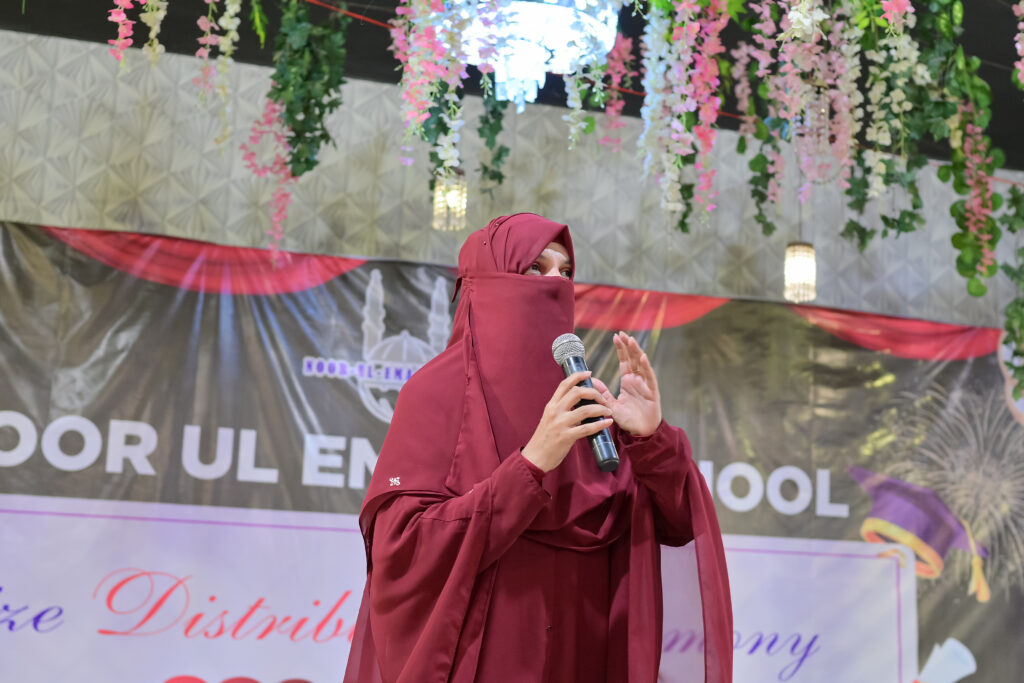
The published campus description says the school day begins with a morning assembly, recitation, short reminders and announcements. This creates a calm routine before lessons begin. The general published schedule is Monday to Friday, approximately 7:45 a.m. to 1:40 p.m., although timings can vary by class. Parents should confirm the current timetable directly.
The school presents a concept-based approach in which students are encouraged to ask questions, discuss ideas and solve problems rather than memorise pages without understanding. Teachers check whether a girl knows why an answer is correct, not only whether she can repeat it.
This approach can help students build the reasoning and communication skills they will need in higher education and professional life. It can also make exam preparation more manageable because understood knowledge is easier to recall and apply.
The Girls Campus content is structured around a complete school pathway:
Learn more about the Pre-Primary Education programme and the Primary Education programme.
The school states that progress is assessed through class performance, monthly tests, assignments and yearly examinations. Ask how parents receive updates and how extra support is arranged when a student needs it.
The published programme covers Quran, Tafseer, Ahadith, Fiqh and Aqaid. Lessons are connected with situations that girls recognise: telling the truth, showing kindness, respecting parents and teachers, practising modesty and taking responsibility for commitments. The aim is not simply to know a lesson for an examination, but to understand it well enough to explain and practise it.
Families who want their daughter to memorise the Quran can ask about the optional Hifz-ul-Quran programme. The school’s published information says it begins from Class 1 and that students continue core subjects such as English, Urdu and Mathematics. Parents should confirm the current timetable, eligibility, revision expectations and how individual student needs are supported.
Our guide What Age Should a Child Start Hifz-ul-Quran? explains why readiness matters more than comparing one child with another.
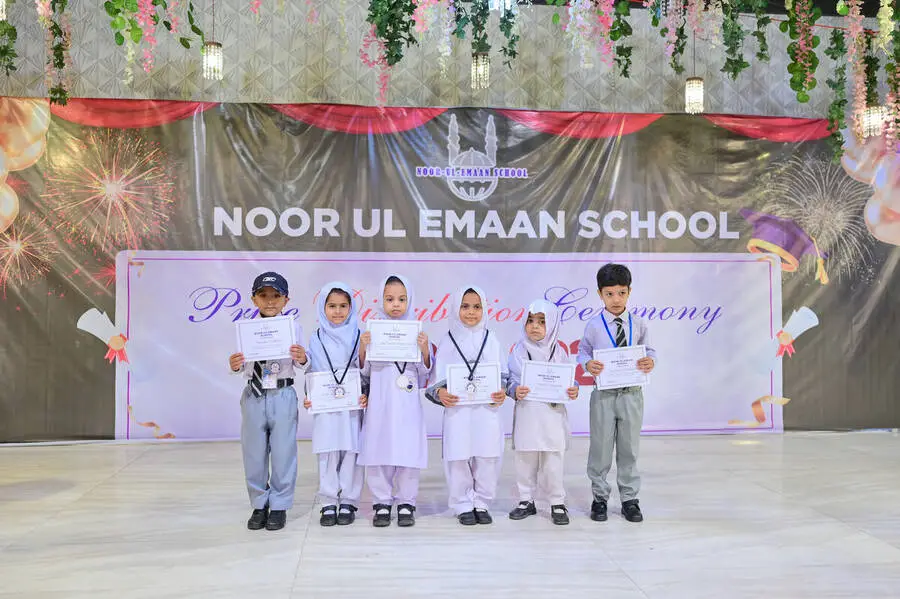
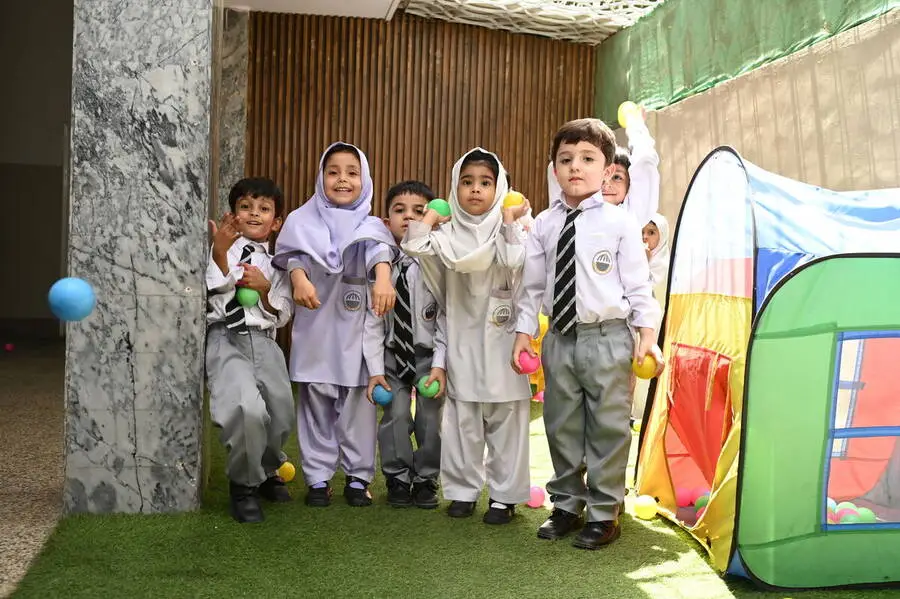
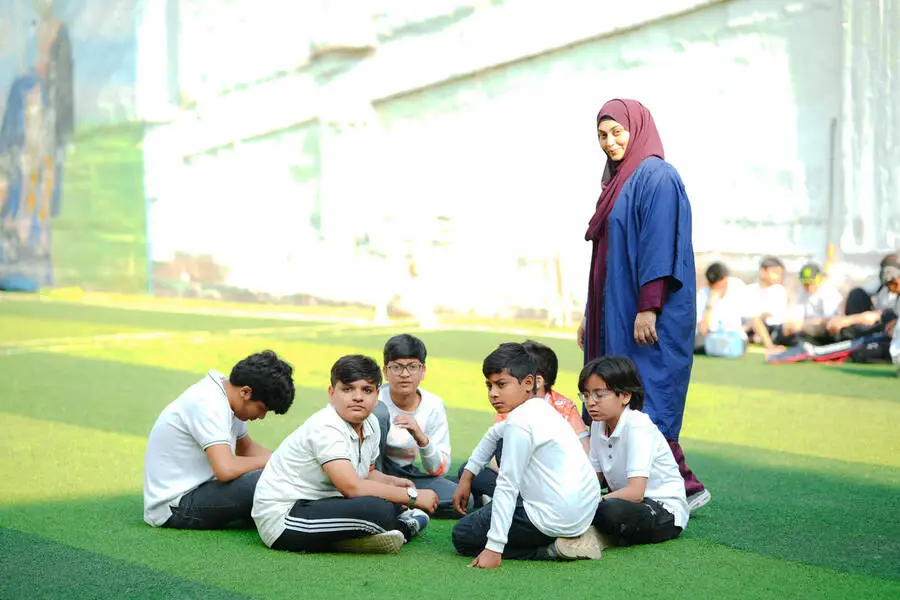
School life should include more than lessons and tests. The Girls Campus content describes competitions, indoor and outdoor activities, craft work and national and religious events. Recognition events can help students see that consistent effort, responsibility and contribution matter alongside marks.
For a wider view of the school environment, read Islamic School Environment in PECHS.
The school states that classes average around 20 students, with an approximate student-to-teacher ratio of 10:1. In a smaller class, a quiet student is easier to notice, a struggling student can receive earlier support and a talented student can be challenged further. Ask how the ratio is calculated for your daughter’s actual class.
Regular counselling can support academic progress, career exploration and wellbeing. The school states that parent-teacher meetings are held twice a year, with additional meetings available when a concern needs earlier attention. Ask how parents receive updates about homework, behaviour, assessments and upcoming events.
Parents need clear information before sending their daughters to school. Ask about CCTV, security staff, visitor access, break-time supervision, online medical consultation and emergency procedures. If your daughter will use school transport, confirm routes, timings, charges and the daily pick-up and drop-off process.
A separate Girls Campus can provide a comfortable setting where students participate, ask questions and take on leadership roles more readily. It also gives the school room to plan routines, activities and communication in a way that respects the values families hold at home.
For families with sons as well, separate Girls and Boys campuses can offer a consistent academic and Islamic framework under one school administration. The important step is to visit the relevant campus and assess whether it suits your daughter’s needs, personality and goals.
For the application process, start with the NUE admission page or contact the school directly.
The admission journey can be completed in four main steps:
The school describes a separate Girls Campus in PECHS Block 2, Karachi. The published Girls Campus location is Noori Masjid Road, 76-N Allama Iqbal Road. Confirm the current address and availability before visiting.
The published pathway covers Pre-Primary—Nursery, KG I and KG II—through Class 10, with Karachi Board preparation in the secondary years. Confirm the current class list with admissions.
The school presents Hifz-ul-Quran as an optional programme beginning from Class 1. Students continue core subjects such as English, Urdu and Mathematics according to the school’s published information.
The school states that the campus has CCTV surveillance, security guards, indoor staff and access to online medical consultation. Ask the admissions team about visitor rules and emergency procedures.
The school states that vans provide pick-up and drop-off from various areas of Karachi. Confirm route coverage, timings, charges and the transport contact process for your area.
The right Islamic school for girls gives your daughter more than good grades. It gives her a strong identity, a clear understanding of her faith and the confidence to pursue the future she chooses.
Noor-ul-Emaan School brings together Karachi Board academics, concept-based learning, Quran with understanding, optional Hifz and character development. The most useful next step is to visit the Girls Campus, ask practical questions and speak with the admissions team about your daughter’s class and goals.
To arrange the next step, submit an admission enquiry or contact Noor-ul-Emaan School directly.