


Copyright © 2026 Noor-ul-Emaan School, All rights reserved.
Home » Why Hira Stopped Cramming Concept-Based Learning in Primary School
Hira was nine years old and in Class 4 when her Science test came back with full marks.
Her father, Imran, was delighted. That evening, he pointed at the money plant on their balcony and asked her a simple question: “Hira, why do plants need sunlight?”
Hira closed her eyes and recited: “Plants make their own food. This process is called photosynthesis.”
“Very good,” said Imran. “But what would happen if we kept this plant in a dark cupboard?”
Hira opened her eyes. She thought for a long moment. Then she said quietly: “That was not in the book, Abu.”
That one sentence stayed with Imran for days. His daughter had the right answer on paper, but she had no idea what it meant. That is the difference between rote learning and concept-based learning in primary school.
In this guide, we explain what concept-based learning is, why it works, how it looks in different subjects, and how you can check at home whether your child is truly understanding their lessons.
Many parents will recognise Hira’s evening. A child memorises definitions, writes them perfectly in the test and forgets them a week later.
Rote learning is not laziness. It is simply what happens when children are taught to repeat instead of to understand. The child does well while the question stays the same. When the question changes even slightly, the child is lost.
You may notice signs like these at home:
Imran did not want Hira to spend the next six years cramming for every test. He wanted her to think.
Concept-based learning means a child understands an idea first and remembers it as a result. Instead of learning a definition, the child explores why something happens, asks questions and applies the idea to real life.
Here is the simple difference:
| Rote Learning | Concept-Based Learning |
|---|---|
| The child memorises the answer | The child understands why the answer is true |
| Works only when the question is familiar | Works even when the question is new |
| Knowledge fades after the test | Knowledge stays and builds year after year |
| The child is afraid to ask questions | The child is encouraged to ask why and how |
| Exams feel stressful | Exams feel like a chance to show what you know |
Concept-based learning is not just a nicer way to teach. It matches how children actually learn and remember.
When a child understands why plants need sunlight, that idea links to other ideas: why we need food, why leaves are green, why plants grow towards windows. Connected ideas are much easier to remember than separate facts.
Hira will probably never forget the pale plant in the cupboard. Children remember what they see, touch, discuss and discover far better than what they copy from a board.
A child who understands a concept can use it in a new situation. This is exactly what higher classes, board exams and everyday life demand.
When children understand their lessons, they stop fearing new questions. They become more willing to raise their hand, try a difficult problem and learn from their mistakes.
The following term, Hira moved to Noor-ul-Emaan School, where lessons are built on concept-based teaching.
In her first Science week, the teacher brought two small plants into the classroom. One went near the sunny window. The other went inside a cupboard. “We will not read about photosynthesis today,” the teacher said. “We will watch it.”
Every day, the class checked both plants and wrote down what they saw. After a week, the plant by the window was green and standing tall. The plant in the cupboard had turned pale and weak.
Hira’s hand went up. “The plant in the cupboard could not make food,” she said. “So it is getting hungry, like us when we skip lunch.”
The whole class laughed, and the teacher smiled. Hira had not memorised photosynthesis. She had understood it. When the definition came later, it finally made sense.
Concept-based teaching takes time. A teacher has to listen to each child’s questions, notice who is confused and explain the same idea in a different way when needed.
That is hard in a class of forty. At Noor-ul-Emaan School, classes have around 20 students and a student-to-teacher ratio of about 1:10, so every child gets the attention that real understanding needs. A quiet child like Hira had space to ask her questions without feeling shy.
The same approach runs through every subject in our primary programme, which covers English, Urdu, Mathematics, Science, Islamic Studies and Quranic learning with translation.
Children use objects and groups to discover what multiplication means before they learn the tables. They solve word problems from daily life, such as sharing sweets equally or counting money at a shop, so numbers have meaning.
Students observe, predict and test simple ideas, like the plant experiment. They learn to ask “what will happen if…?” and check their answers through observation.
Children are encouraged to explain ideas in their own words instead of copying model answers. Reading is followed by discussion, so students understand stories and can share their opinions.
Quran and Hadith are taught with meaning, so children understand what they recite and how it connects to their manners and daily choices. A child who knows a verse is about gratitude is far more likely to practise gratitude.
Regular competitions, class presentations and outdoor trips give children more chances to use what they learn outside the textbook.
The same approach runs through every subject in the primary programme, which covers English, Urdu, Mathematics, Science, Islamic Studies and Quranic learning with translation.
In Mathematics, children use objects and groups to discover what multiplication means before they learn the tables. In Islamic Studies, Quran and Hadith are taught with meaning, so children understand what they recite. In English and Urdu, children are encouraged to explain ideas in their own words instead of copying model answers.
Monthly competitions, class presentations and an outdoor trip every two months give children more chances to use what they learn outside the textbook.
This is the question almost every parent asks. The answer is yes.
Karachi Board exams reward children who can apply knowledge, not just repeat it. A child who has understood concepts since primary school does not need to cram in Class 9 and 10. Preparation happens naturally, year by year, because each new lesson builds on ideas the child already understands.
You can check this at home in five minutes. Try these simple tests with your child:
If your child struggles with these, it may be time to look for a school that teaches understanding first. Our guide to choosing a primary school in Karachi explains what to look for on a school visit.
A year later, Imran and Hira were on the balcony again. This time, Hira was the one asking questions.
“Abu, why do the leaves turn towards the window? Is the plant looking for the sun?”
Imran laughed. He did not know the full answer. So the next day, Hira asked her teacher, and came home to explain it to him.
That is what concept-based learning in primary school gives a child: not just answers, but the confidence to keep asking.
Noor-ul-Emaan School in PECHS Block 2 offers concept-based education from Nursery to Grade 10, with Quranic learning with translation and an optional Hifz-ul-Quran programme alongside regular classes.

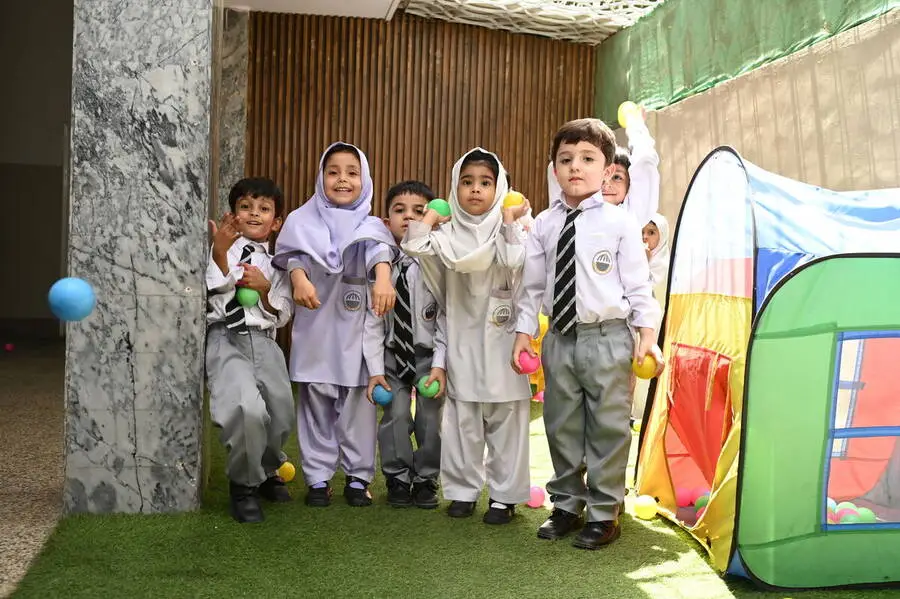
Concept-based learning means children understand an idea before they memorise it. They explore why something happens, ask questions and apply the idea to real life.
In most cases, no. Since Quranic recitation, Tajweed basics and Islamic studies are part of the daily school routine, children get consistent religious education during school hours. This saves families both time and extra fees.
Rote learning asks children to memorise answers. Concept-based learning helps them understand why an answer is true, so they can solve new questions and remember lessons for longer.
Yes. Board exams reward children who can apply knowledge. Children who understand concepts from primary school prepare naturally and do not need to cram later.
Ask your child to explain an answer, change the question slightly, or ask them to teach you. If they can explain in their own words, they will understand.