
Copyright © 2026 Noor-ul-Emaan School, All rights reserved.
Home » How to Choose a Primary School in Karachi: A Parent’s Guide Through Ayaan’s Story
It was a Tuesday evening when Sana realised something was wrong.
Her seven-year-old son, Ayaan, was sitting at the dining table with his Maths book open. He could recite the table of six perfectly, every line, without a single mistake. Sana smiled proudly. Then, just to check, she asked: “Ayaan, if you have six bags and each bag has four mangoes, how many mangoes do you have?”
He looked at her blankly. Then he began to recite the table from the beginning.
“He knew the answer,” Sana later told her sister. “He just did not know what it meant.”
That night, Sana did what many parents do every admission season. She opened her phone and started searching for a school that could teach her child to understand, not just to remember.
If you are in the same position, this guide is for you. Through Ayaan’s story, we explain what to look for when choosing a primary school in Karachi, which questions to ask on a school visit, and how to tell whether your child is truly learning.
Ayaan was not a weak student. He was a hardworking boy who had been taught to repeat. Rote learning can help a child pass the next test, but it rarely helps him think when the question changes.
The primary years, from Class 1 to Class 5, are when children build the foundations for everything that comes later. If those foundations are built on memorising alone, children often struggle in higher classes, where questions are designed to test understanding.
| Rote Learning | Concept-Based Learning | |
|---|---|---|
| Main goal | Remember the answer | Understand why the answer is true |
| When the question changes | Child gets stuck | Child can work it out |
| How long learning lasts | Often forgotten after the test | Stays for years |
| Child’s role | Repeat and copy | Ask, explore and explain |
| Preparation for board exams | Last-minute cramming | Steady, natural readiness |
Sana did not want a school that only finished the syllabus. She wanted one where her son would ask “why” and “how”, and where his faith and his studies would both have meaning.
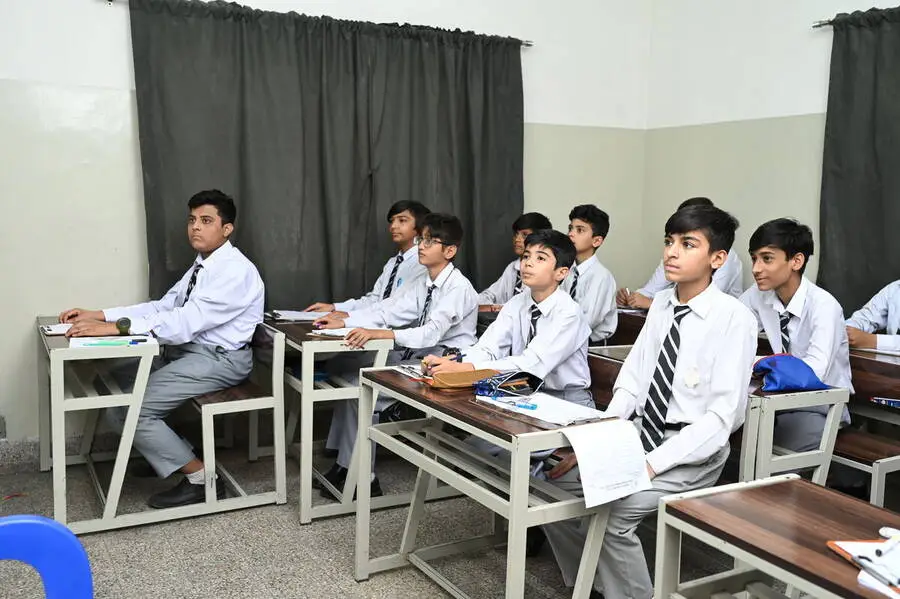
Every family has different priorities, but these seven points matter for almost every child.
Ask how teachers explain a new idea, not just what the syllabus covers. Good primary teachers use objects, examples, discussion and real-life problems so children understand concepts before practising them. Our article on concept-based learning in primary school explains this approach in more detail.
In a crowded classroom, quiet children can go unnoticed for months. Ask how many students are in each class and how many teachers support them. A student-to-teacher ratio of around 1:10 means a teacher can genuinely know every child.
For Muslim families, recitation is important, and understanding makes it come alive. Ask whether the Quran is taught with translation and whether Islamic Studies connects to children’s daily behaviour.
Look for visible safety measures such as CCTV, security guards and supervised spaces. Ask about transport if your child will need a school van.
Assemblies, class presentations, competitions and trips help children speak up and believe in themselves. Ask how often children get a chance to perform or present.
A good school does not only contact you when fees are due. Ask how progress is shared, how often parent-teacher meetings happen and whether counselling support is available.
Primary school should prepare children for secondary classes and, later, Karachi Board examinations. Ask how the school builds study habits and how assessments are planned through the year.
These were the exact things Sana looked for. Here is what she found.
A few days later, Sana and her husband visited Noor-ul-Emaan School in PECHS Block 2. They had many questions. How many children are in one class? Is the campus safe? Will Ayaan still learn the Quran? Will he be pushed into memorising answers?
The answers surprised them. The student-to-teacher ratio was 1:10, which meant a teacher could actually know every child. The campus had CCTV and security guards, and safe transport for pick-up and drop-off. The school’s approach was clear: understanding first, memorising second.
“We do not teach children to repeat,” a teacher told them. “We teach them to ask why and how.”
Sana remembered the mangoes. They applied for admission that week.
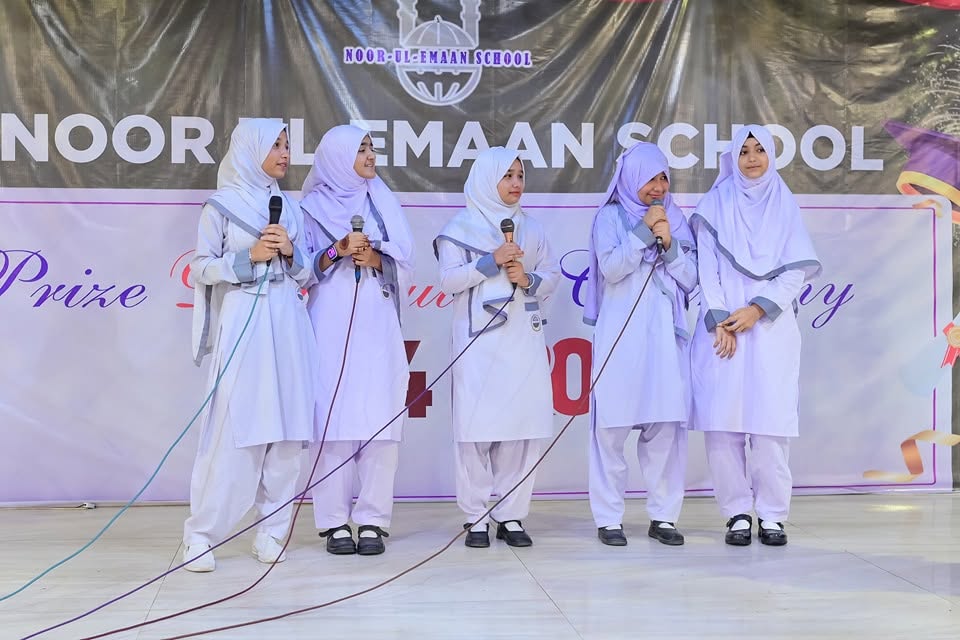
On his first day, Ayaan walked into the school hall with a nervous stomach and a new bag. The day began with the morning assembly. Students stood together, listened to the recitation and heard a few motivating words to start the day well.
Children from different classes took turns to speak, and the hall was full of energy. Ayaan did not speak that day. But he watched an older student speak confidently in front of everyone, and he thought: maybe one day, I could do that too.
A few weeks later, his Maths teacher placed a basket of small objects on the desk. “Today,” she said, “we are not going to learn the table. We are going to find out what multiplication is.”
The children made groups. Six groups, four objects in each. They counted them together, moved the objects around and counted again. Then they asked what would happen with five groups of four, or four groups of six.
Ayaan’s hand went up before he realised it. “It is the same number!” he said. “Six fours and four sixes, it is the same. It is just the groups that change.”
This is concept-based learning in action. Children understand the idea, ask questions, solve problems and apply what they learn to real situations. When a child understands why something is true, he does not need to cram it. It stays with him, and it will help him years later in his board exams.
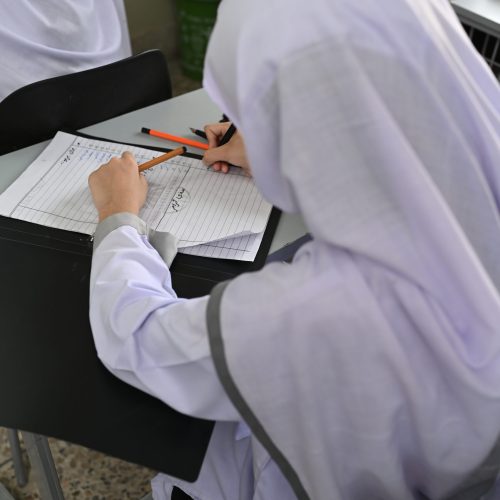
There was another change Sana noticed, and it touched her more than the Maths did.
Ayaan had always recited short surahs at home, but only because he had been taught the sounds. At Noor-ul-Emaan School, Islamic Studies and Quranic learning with translation are part of the primary programme, and Quran and Hadith are taught with meaning.
One evening, Ayaan stopped in the middle of his recitation and said: “Ammi, do you know what this means? It means Allah is telling us to be grateful.”
Sana did not say anything for a moment. For years she had wanted her son to love the Quran, and now he was beginning to understand it.
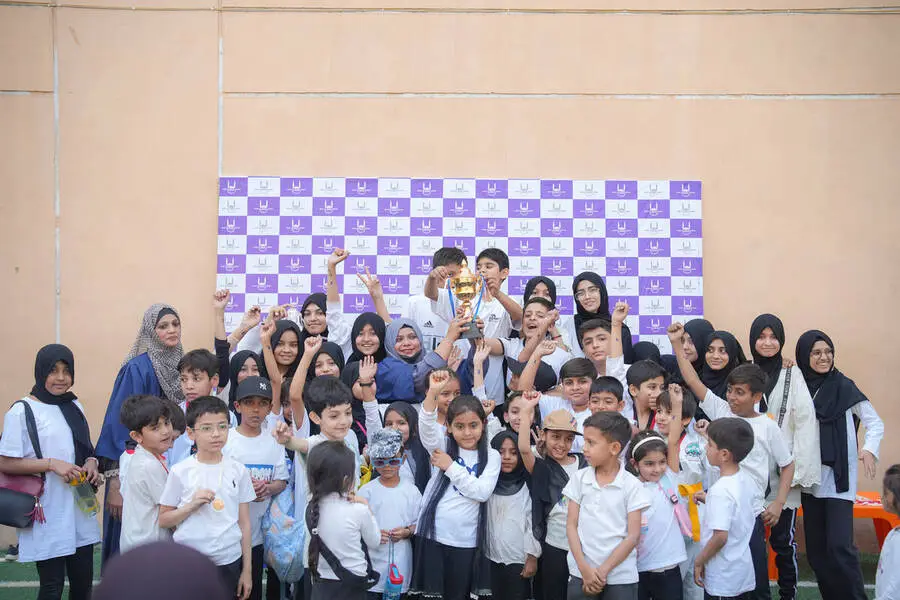
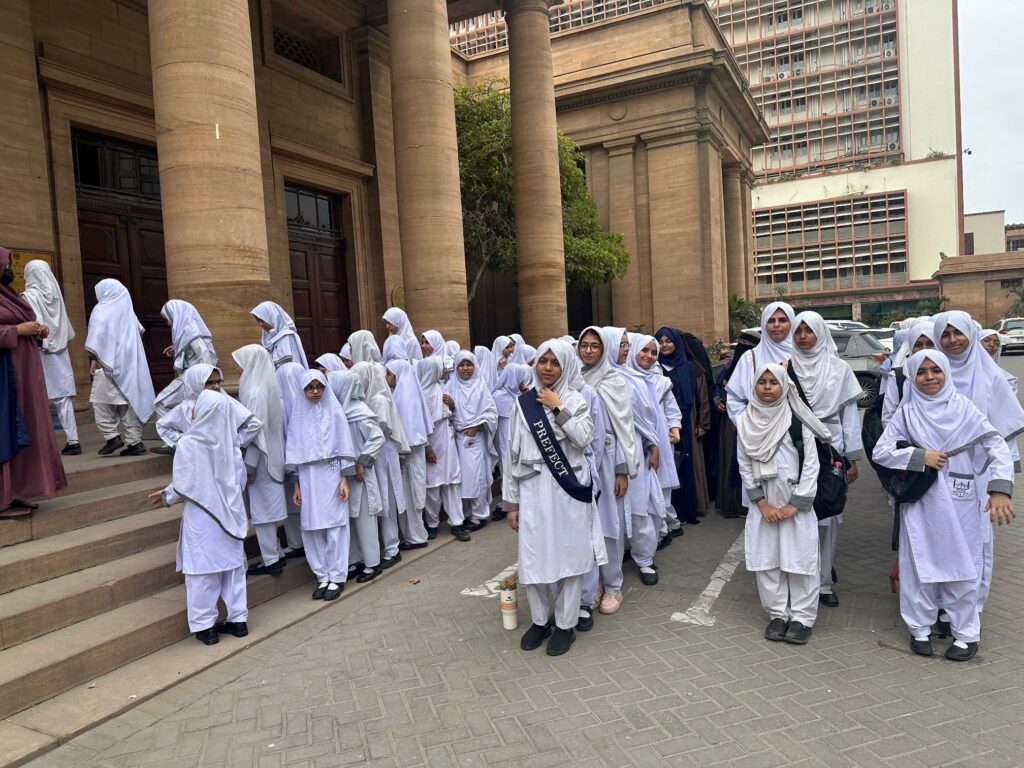
As the months passed, school became more than lessons for Ayaan. There was a competition every month and an outdoor trip every two months. On one trip, his class visited the State Bank Museum and saw how money in Pakistan has changed over the years.
He took part in his first class presentation, and his voice shook, but he finished it. His teacher clapped. His classmates clapped. Ayaan walked home that day an inch taller.
The teachers noticed things too. When Ayaan seemed quiet for a few days, his class teacher called Sana to ask if everything was fine.
At Noor-ul-Emaan School, regular communication with parents and counselling support help the school notice small worries before they become big ones. With only ten children for every teacher, no child gets lost in the crowd.
One evening, almost a year later, the whole family was sitting at dinner when Ayaan put down his spoon and asked: “Abu, why do we say Bismillah before eating?”
His father began to answer. Ayaan listened carefully, nodded, and then asked another question.
Sana looked at her husband and smiled. This was the child who once recited a table without knowing what it meant. Now he asked why about everything.
If you are a parent searching for a primary school in Karachi, Sana’s experience suggests five questions to ask on your school visit.
Noor-ul-Emaan School in PECHS Block 2 offers education from Nursery to Grade 10, with concept-based teaching at every stage.
Stage | Classes | What children learn |
Pre-Primary | Nursery, KG1, KG2 | A joyful start to learning |
Primary | Classes 1 to 5 | English, Urdu, Mathematics, Science, Islamic Studies and Quranic learning with translation |
Karachi Board preparation begins naturally, because children who understand their lessons are ready for exams when the time comes.
Every child has a “Why?” waiting to be answered. If you are looking for a primary school in Karachi that teaches understanding, faith with meaning and confidence, visit our campus and meet our teachers.
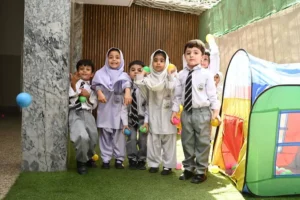
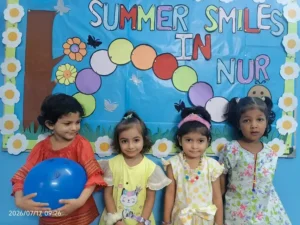
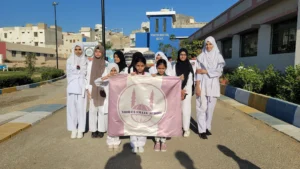
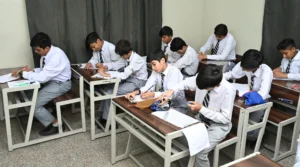
Note: Ayaan and his family are an illustrative example, written to show what concept-based primary education can look like. Photographs are from Noor-ul-Emaan School events and activities.
The primary programme covers Classes 1 to 5. Younger children start in Pre-Primary, which includes Nursery, KG1 and KG2.
Concept-based learning means children understand an idea before they memorise it. They ask questions, solve problems and apply lessons to real situations, so what they learn stays with them.
The student-to-teacher ratio is 1:10, so every teacher can know and support each child.
Yes. Islamic Studies and Quranic learning with translation are part of the primary programme, and Quran and Hadith are taught with meaning.
Yes. An optional Hifz-ul-Quran programme runs side by side with regular classes for families who choose it.
The campus has CCTV, security guards and safe transport for pick-up and drop-off.
The campus is at 76-N Allama Iqbal Road, Block 2, P.E.C.H.S., Karachi.
Apply online at nue.edu.pk/admission, call 0301 205 1888, or email info@nue.edu.pk.